
Stability of a scaffold starts with a proper constructed vertical part of the scaffold.
The scaffolding standards of Ringlock Scaffolding are main load bearing parts of a scaffold. These members carry the load of working platforms as well as horizontal parts of the scaffold.
This contrasts with tube and coupler style scaffolds where members can be connected in a seemingly endless variety of configurations. Ringlock scaffolding allows integration of ledgers and diagonal braces into the main vertical structure of the scaffold in a predefined manner.
How Ringlock Standards Transfer Vertical Loads
This Ringlock Vertical standard consists of steel tubes, with the rosettes being located on fixed positions on the tube. In the Ringlock system the standards are locked with the ledgers and diagonal beams by means of wedge locking.
As the vertical load-carrying members of the Scaffolding Ringlock System, the scaffolding standards transfer the loads from the working platforms of the individual levels down to the base jacks of the scaffold on the ground.
Multidirectional Connections for Improved Structural Stability
The rosette connection of the Multidirectional Scaffolding allows for various connections of horizontal and diagonal components.
The vertical standards are working together with the ledgers, the diagonal braces and the base jacks within a Scaffolding Ringlock System. While the standards are transferring vertical loads, the diagonal braces are preventing a lateral deflection of the scaffold.
When buying Ringlock Steel Scaffolding it is essential to check the dimensions of the rosettes, spigot height and tolerances of connections when purchasing mixed lots of used scaffolding or parts from other manufacturers (e.g. Layher). There is no compatibility guarantee even if scaffolding parts look similar.
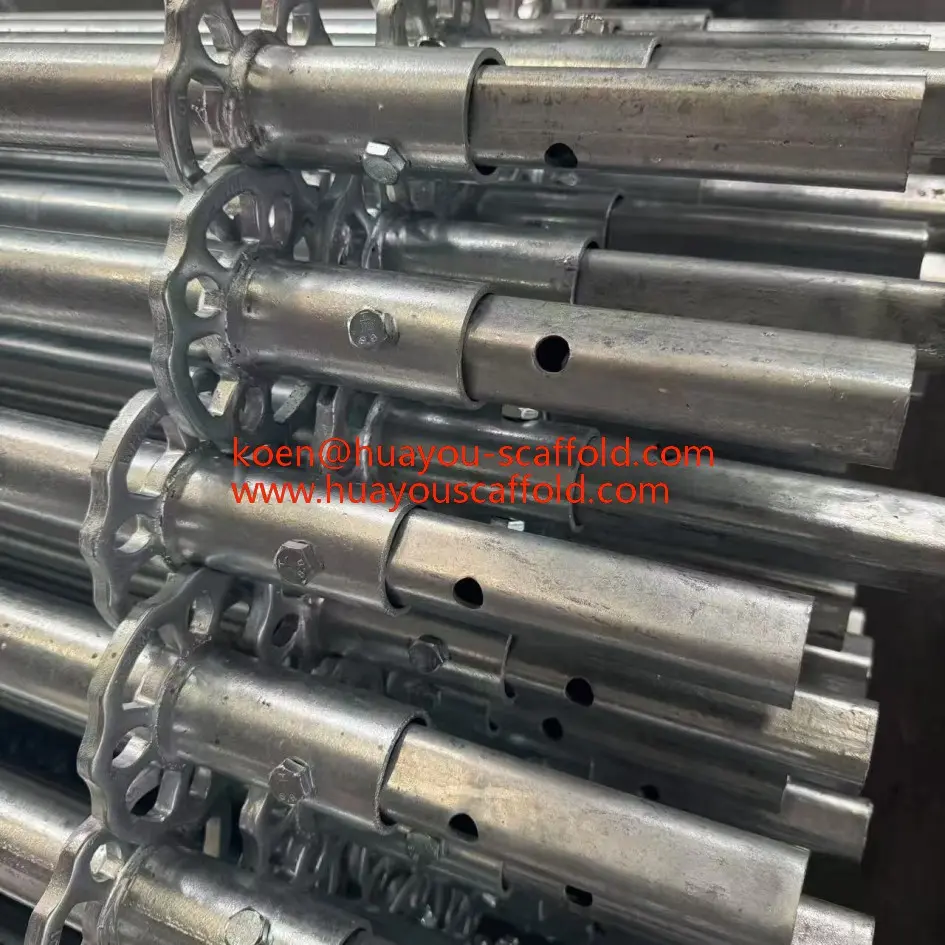
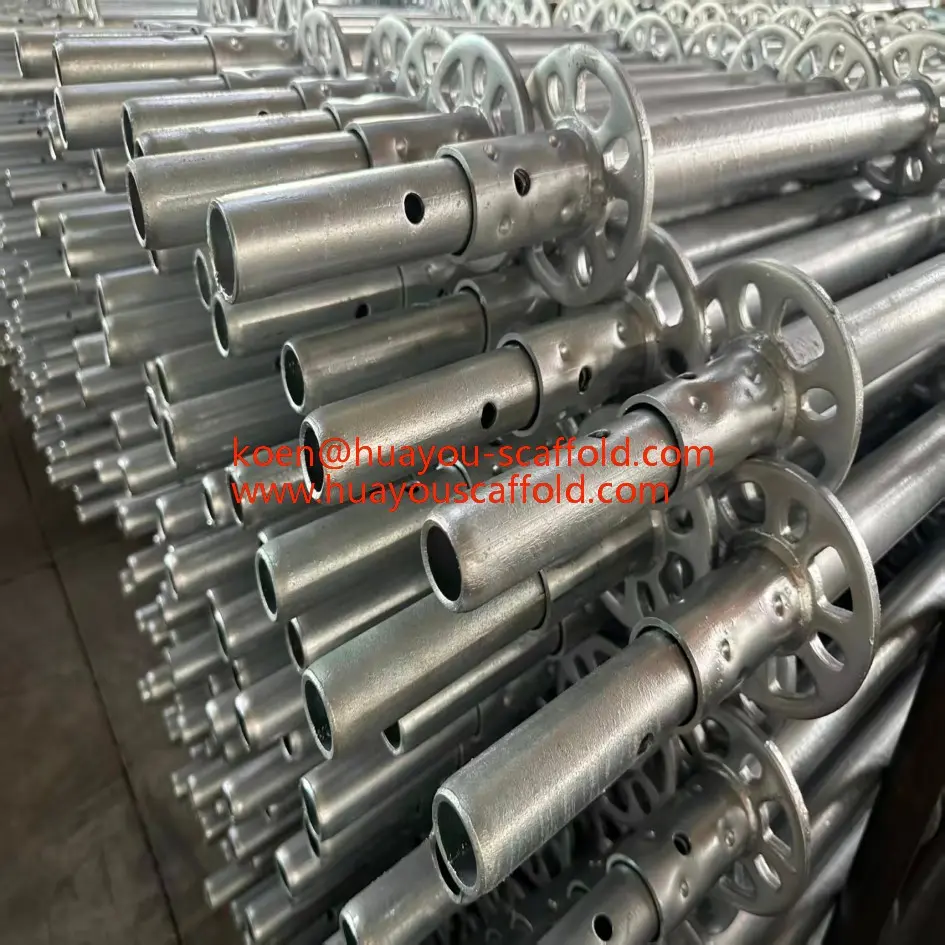
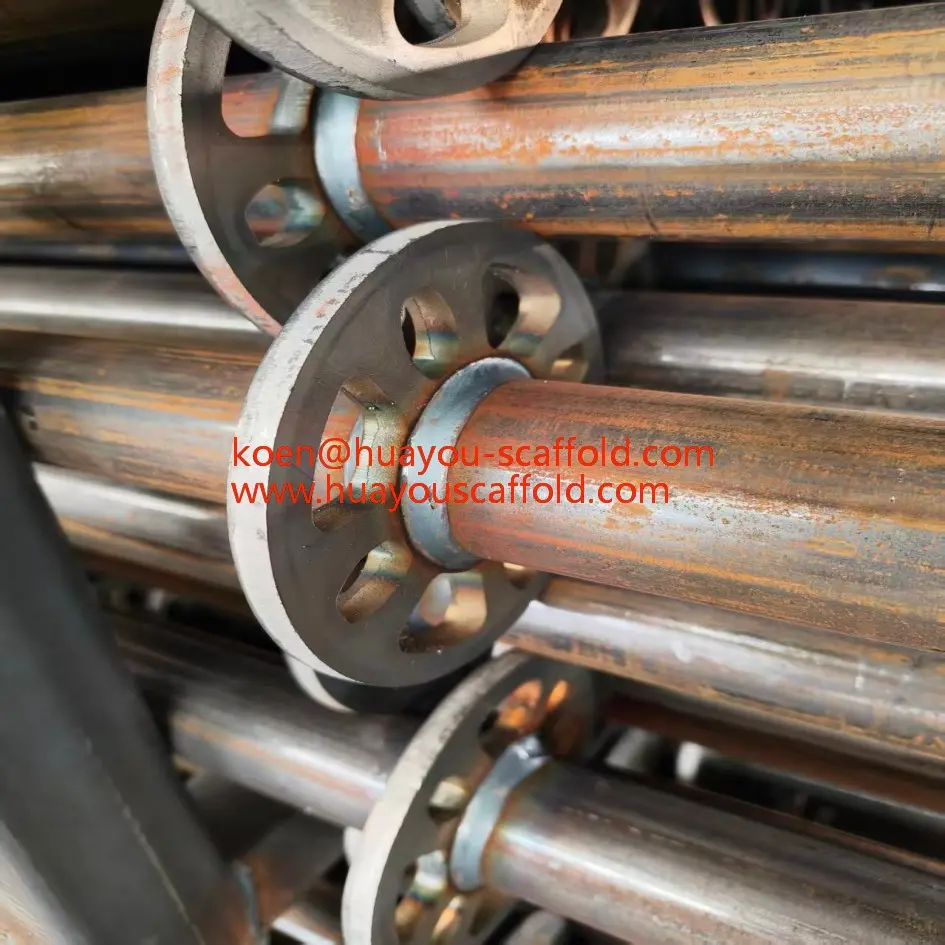
Key Specifications and Factors Affecting Scaffold Performance
When buying Ringlock Steel Scaffolding, also check the specifications of the vertical Scaffolding Standards versus the requirements of the complete scaffolding system.
| Parameter | Typical Ringlock Specification |
|---|---|
| Product Name | Ringlock Scaffolding Standard |
| Material | Structural Steel |
| Common Steel Grade | Q235 / Q355 |
| Common Tube Diameter | 48.3 mm / 60.3 mm |
| Typical Wall Thickness | 3.0–3.2 mm |
| Common Lengths | 0.5–3.0 m |
| Typical Rosette Spacing | 500 mm |
| Connection Type | Rosette and Wedge Locking |
| Surface Treatment | Hot-Dip Galvanized |
| Application | Modular Scaffolding Systems |
Typical specifications for Ringlock scaffolding standards are shown above. It is essential to verify with the manufacturer or supplier the exact specifications prior to ordering.
Galvanized Scaffolding is suitable for outdoor construction as it offers corrosion protection against moisture and environmental exposure. The Hot-dip galvanizing process protects steel surfaces during repeated use for assembly, transportation and storage.
Manufacturing Excellence Since 2013
Scaffolding and formwork products have been manufactured by Huayou since 2013. The export company Huayou Export was established in 2019. Now, Huayou has customers from almost 50 countries all over the world. To render overall coordination of procurement, production, quality control and transportation for our clients worldwide, we have developed the related procedures and standards.
The reliable scaffold performance is based not only on the single vertical load carrying steel pipe but also on other scaffold components like foundations, bracing and the complete scaffold design.
Frequently Asked Questions
Q1: What is the main function of ringlock standards?
These components transfer the vertical loads of the scaffold via the scaffold structure to the base which supports the scaffold. They also provide attachments for the ledgers and the various types of braces used in scaffolding.
Q2: Why are ringlock standards hot-dip galvanized?
Hot-dip galvanizing prevents corrosion of steel parts, especially in outdoor applications and in storage.
Q3: Can ringlock standards be connected to different brands?
It is best to check the connection dimensions of the other brand and compare this with the technical documentation of the respective system and the applicable requirements.
Q4: How do buyers select suitable ringlock standards?
With regard to steel tube consider diameter, wall thickness, length, steel grade and connection details. Also take into account the structural requirements of the project in question.
Post time: Nov-21-2026


