
In selecting a scaffold coupler, more needs to be considered than just selecting a scaffold clamp to join steel tubes together. The type of connection, site working conditions, surface protection required and relevant standards need to be taken into account. Australian Standard scaffold couplers for use in Australia are frequently selected on the basis of AS/NZS 1576.
Select a coupler that matches the specified tube diameter, meets the required connection, and has relevant test data to support its use. Purchase scaffolding with the correct features before it is delivered to site to avoid potential problems later.
Understanding Different Scaffold Coupler Types and Functions
There are not many types of connections used in scaffolding structures but each one serves a different function. A double coupler (also referred to as a Fixed Coupler) is used for connecting two scaffold tubes together at a right angle and is usually a fixed 90 degree connection.
Swivel couplers are used to allow scaffold tubes to cross at any angle, often used for diagonal bracing and complex scaffolding arrangements. Heavy duty swivel couplers could be used where higher connection performance is required.
Other couplers which are of use are putlog couplers and girder clamps. These are used for specific connections and one should establish what connection is required prior to purchasing such articles.
Choosing Couplers for Different Construction Site Conditions
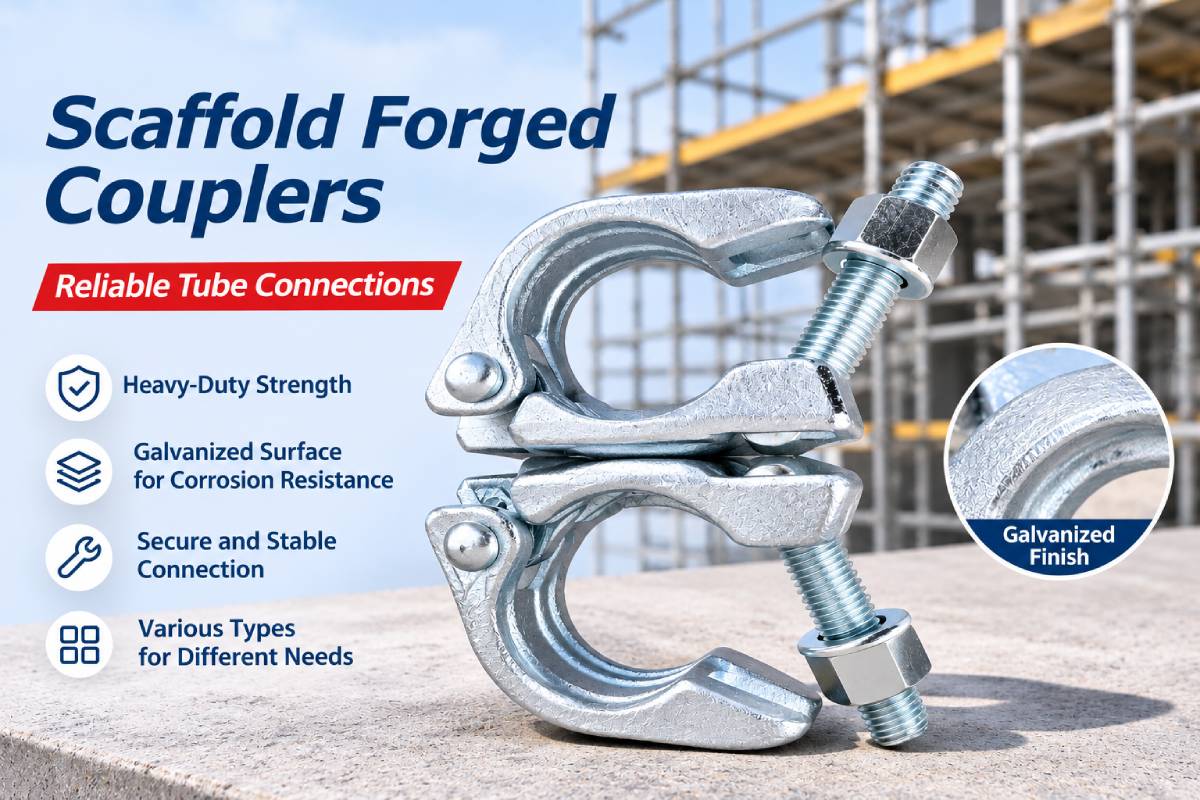
Galvanized couplers have a zinc coating which protects exposed steel in scaffolding from corrosion in cases where scaffolding is used in outside applications and subject to rain, moisture etc. They are subject to repeated use.
However, the surface treatment does not necessarily say anything about the load bearing capacity of a scaffold coupler. In the case of heavy duty scaffold couplers, buyers should also ask for information about the manufacturing, bolts, tightening and slip resistance.
It is essential to recognize that even a Scaffold Forged Coupler does not necessarily have a higher load capacity due to forged construction. Its actual performance depends entirely on the design of the complete Scaffold Coupler and on its respective tests.
For more complex scaffold connections it is possible to combine fixed couplers with swivel couplers to allow the necessary degree of connection configuration in line with the approved design of the scaffold.
Huayou has been producing scaffolding and formwork products for over 8 years. In 2019 Huayou established its export company to provide coordinated production, quality control, procurement and export services to companies worldwide, with over 45 countries’ customers.
Only when the required scaffold couplers have been selected from the various models on offer on the basis of the scaffold design and not on price, once the main tubes sizes have been established, the required connection types covered, the degree of corrosion protection required has been determined and the relevant documentation comprising test reports and other compliance documents reviewed, can a purchases be confidently made.
Frequently Asked Questions
Q1 What is the difference between fixed and swivel couplers?
The fixed coupler is a 90 degree connection between two tubes, whereas the swivel coupler allows connection of the tubes at different angles.
Q2 Are hot-dip galvanized couplers suitable for outdoor use?
Yes, hot-dip galvanizing provides a degree of corrosion protection for scaffolding components exposed to the elements and depends on the quality of the coating, as well as the exposure to the environment.
Q3 Does every scaffold coupler meet AS/NZS 1576 requirements?
No, all scaffold couplers are not AS/NZS 1576 compliant. Verify the test reports for any coupler that is to be used on site and request copy of compliance documents for the specific coupler model.
Q4 What information should buyers provide when requesting a quotation?

Post time: Nov-17-2026


