
A scaffold board may look to be sitting well on the transom to which it has been attached during the erection of the scaffold, however it is not unknown for movement, repeated use and strong winds to cause the board to shift over time. A scaffold limpet clamp is used to hold the board to the scaffold tube.
For buyers, specification of limpet clamps to scaffold components is not just about price. Importance must be placed on board thickness, cap design, surface finish and bolt detail to ensure the clamps can be easily installed and subsequently maintained over time.
Check Board Thickness and Clamp Compatibility First
When purchasing limpet clamps for scaffold timber, check the actual thickness of the boards you use. Huayou scaffold limpet clamps are designed for use with boards up to 58 mm thick. It’s always best to check the actual dimensions of your decking before purchasing any scaffold components.
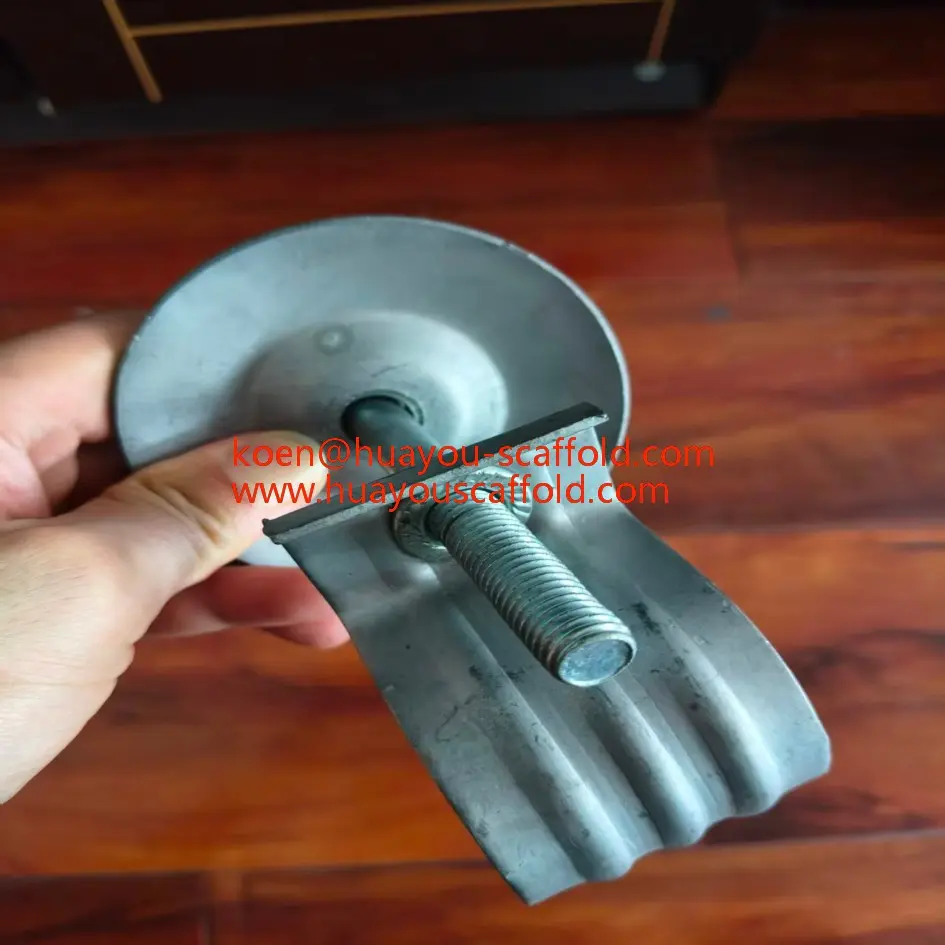
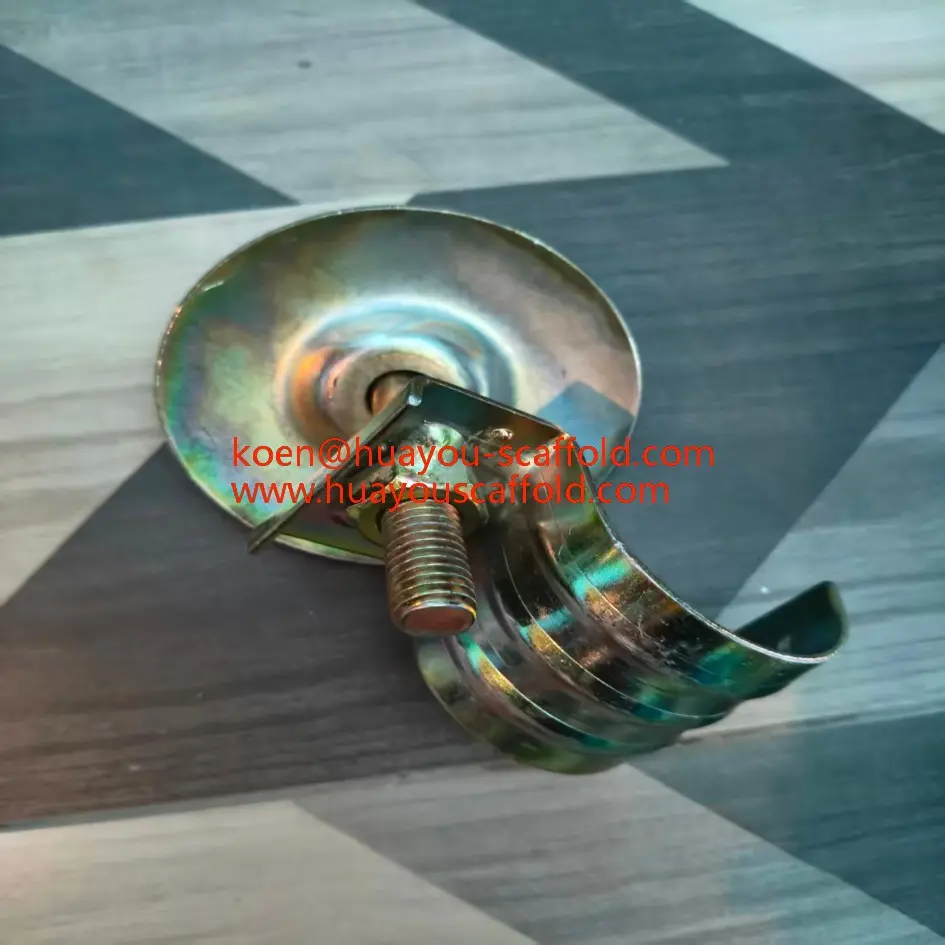
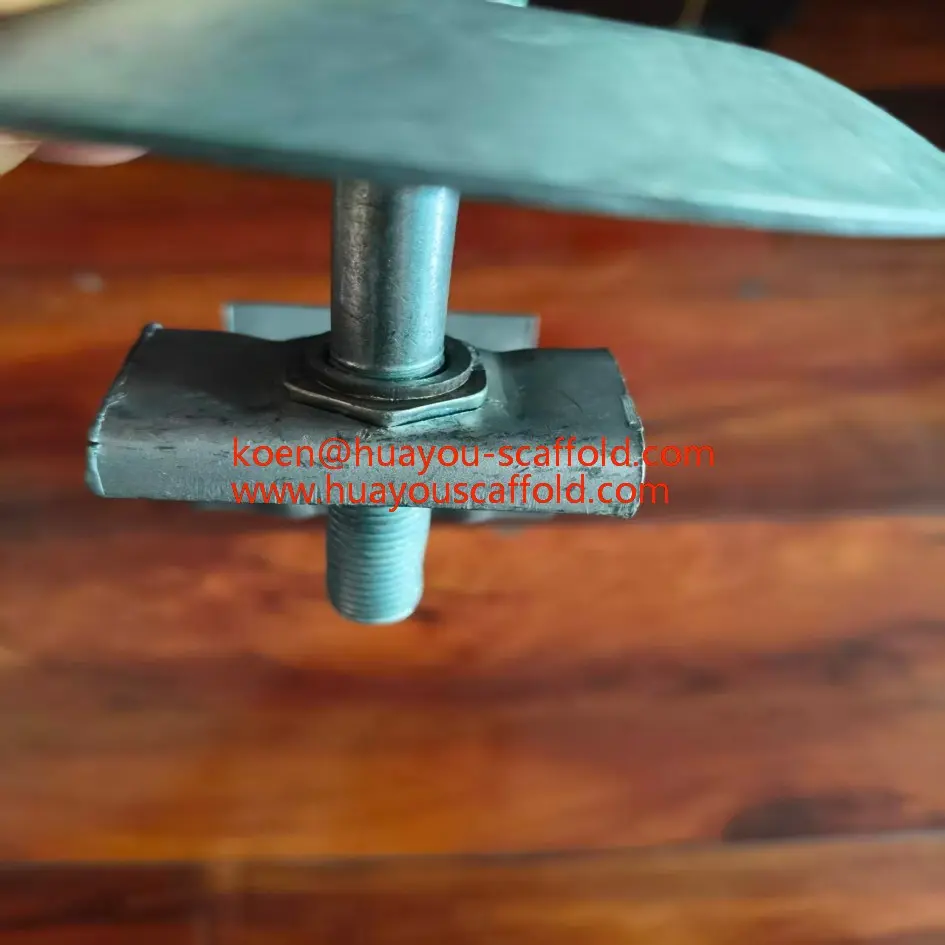
These differ from normal scaffold couplers which connect two scaffold tubes together. A limpet scaffold clamp has a hooked body that sits under the transom and a cap that sits on the edge of the board, and is held in place with a bolt.
Scaffold limpet clamps for timber boards should take account of the thickness of the board and its condition at the edges. Metal deck couplers for steel decking are selected on the basis of the steel deck profile and whether or not the coupler can securely engage the decking.
Therefore, a scaffold limpet coupler must be selected with the actual board and transom in view, not just with the board thickness in view.
Compare Round Cap and Square Cap Designs
Not all limpet clamps use the same cap shape. Huayou offers round-cap and square-cap versions, each intended for board-retaining applications.
The round-cap version weighs approximately 0.36 kg. Its compact design makes it a practical choice where lighter fittings are preferred.
The square-cap model weighs around 0.43 kg and provides a broader contact area against the board. This can be useful when buyers need a different pressure distribution across the board surface.
Neither design should be selected by weight alone. Buyers should consider the board material, installation arrangement, and project requirements.
Consider Surface Finish and Project Conditions
Surface protection matters when scaffolding couplers are repeatedly exposed to moisture, rain, or outdoor storage.
Electro-galvanized fittings may be considered for less demanding environments, while hot-dip galvanized versions provide a thicker protective coating for more exposed applications. Painted finishes are another available option.
Buyers requesting a BS1139 Standard Coupler should confirm the applicable requirements and ask for supporting documentation for the specific product model.
For rental companies purchasing large quantities of scaffolding limpet clamps, consistent dimensions, replacement availability, and packaging also matter. These details can influence handling and maintenance costs across repeated projects.
Huayou has manufactured scaffolding and formwork products since 2013 and established its export company in 2019. With customers across nearly 50 countries, the company provides different clamp configurations and surface treatments for international buyers.
Before confirming an order, buyers should compare actual board dimensions, cap styles, corrosion protection, and required documentation. A properly matched clamp is more useful than one chosen simply because it has the lowest unit price.
Frequently Asked Questions About Scaffold Limpet Clamps
Q What are scaffold limpet clamps used for?
Q Which is better, a round cap or square cap?
Q Can limpet clamps be used with steel decking?
Q What information should buyers provide when ordering?
Post time: Nov-18-2026


