
Choosing the correct formwork tie rod and matching nut is not as straightforward as picking the cheapest option off a supplier list. The wrong combination can lead to loose formwork panels, uneven concrete surfaces, or even onsite failures that delay construction schedules.
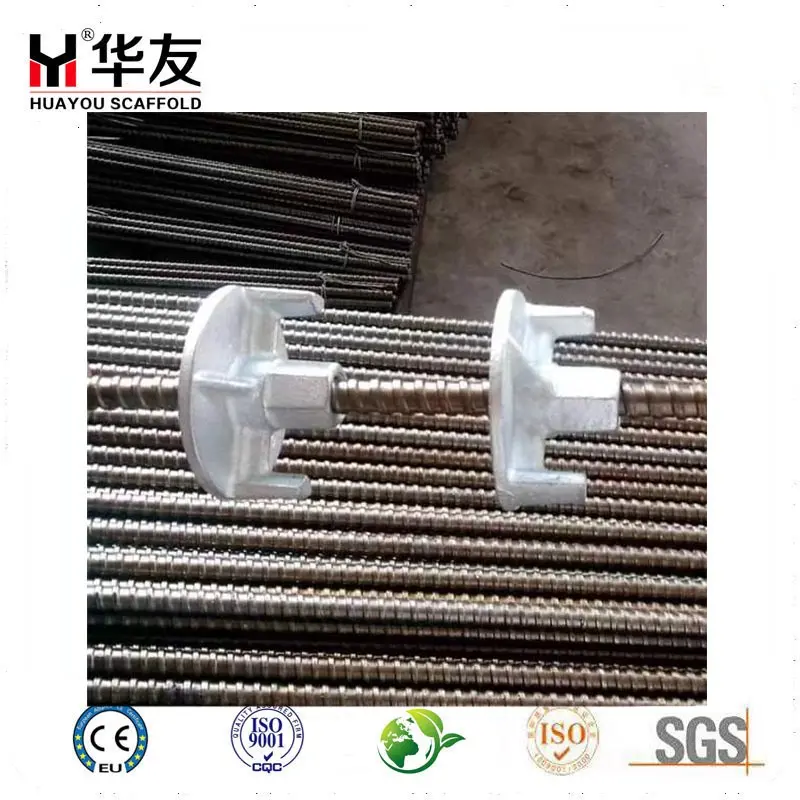
In the concrete forming process, the formwork tie rod acts as the backbone connecting two opposing formwork panels. Without a properly rated rod, the pressure from wet concrete can push panels apart, causing blowouts or dimensional inaccuracies. The nuts—whether round, wing, or hex types—lock everything tight, so selecting the right pairing is a decision that directly affects job quality and worker safety.
What to Look for in a Formwork Tie Rod
The first question buyers usually ask is about size. Standard formwork tie rod diameters commonly used are D15/17mm and D20/22mm. The choice between these depends on the wall thickness and the pour height. Thicker walls or taller pours generate more lateral pressure, requiring a larger rod diameter. Length is another variable—most suppliers, including us, cut tie rods to custom lengths based on project drawings, so there is no need to settle for standard stock that might not fit your formwork setup.
Material grade is equally important. For heavy-duty applications where tensile strength is critical, we recommend a formwork tie rod made from #45 hot-rolled steel. This delivers tensile strength up to 185–190kN for D17 rods and around 210kN for D20 rods, making it suitable for high-rise building cores or bridge piers. For less demanding jobs—say, ground-level retaining walls or small residential foundations—a Q235 cold-drawn rod offering 130–140kN tensile strength can handle the job at a lower cost.
- D17 rod: 185–190kN tensile strength
- D20 rod: ~210kN tensile strength
- Ideal for high-rise cores & bridge piers
- 130–140kN tensile strength
- Suitable for retaining walls & residential foundations
- Lower cost for low-load applications
Matching the Right Nut to Your Tie Rod
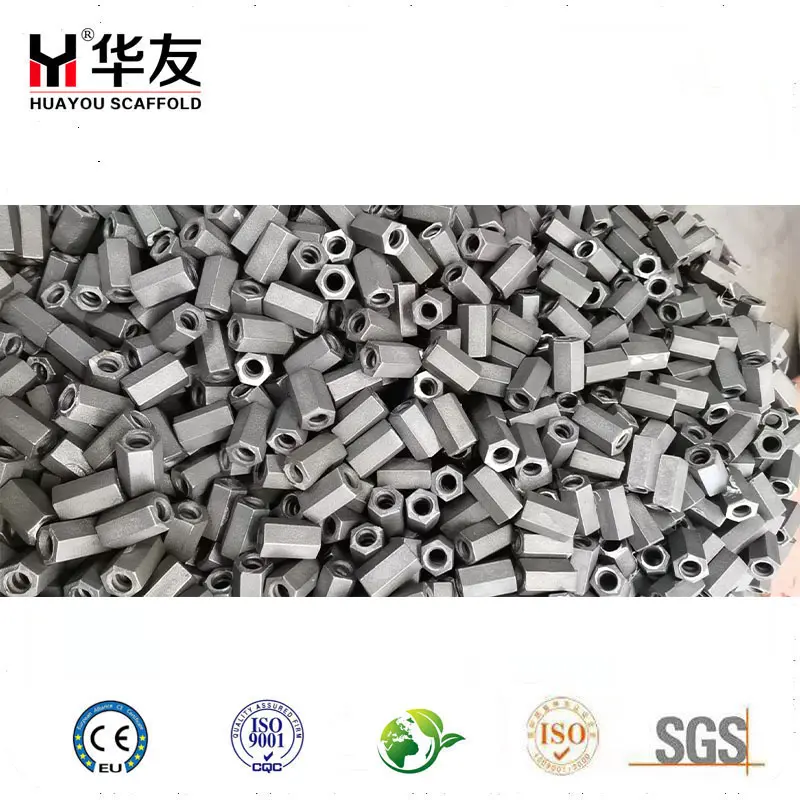
The formwork tie nut is where many buyers get confused. Different nut designs serve different purposes, and choosing blindly can make installation and stripping more difficult than necessary.
Round Nuts
Simple threading mechanism; works with standard tie rods. Most common type.
Wing Nuts
Preferred for quick hand-tightening, especially in repetitive forming jobs.
Swivel Nuts
With round plates; useful when the tie rod sits at a slight angle—common in sloped or tapered wall designs.
Hex Nuts
Provide maximum torque when using wrenches for tighter, more secure connections.
Water Stoppers
Incorporate a sealing feature to prevent water ingress through the tie hole.
Washers
Distribute load evenly and protect the formwork face from damage.
All our formwork tie nuts are manufactured from QT450 ductile iron, giving them consistent strength across different designs. Common outer diameters are D90, D100, D110, and D120, and we stock both British and metric thread patterns to suit different regional preferences.
Quality Standards You Should Know
A reliable formwork tie rod and nut set must pass proper testing. Our production follows GB/T28900 and GB/T 228 standards, meaning each batch is checked for tensile performance and dimensional accuracy. From raw steel incoming to the final container loading, our QC team inspects every step so the products arrive at your site in good condition.
Final Advice
Here is the straightforward truth: many construction teams focus only on unit price when buying these components. That approach can work if your project has low load demands, but for safety-critical applications, base your selection on tensile strength, diameter, and material quality first. The formwork tie rod and formwork tie nut work as a pair—skimping on one compromises the other.
We have been supplying these products to Southeast Asia, the Middle East, Europe, and the Americas, and our principle is simple: tell us your wall thickness, pour height, and thread preference, and we will recommend the exact combination that fits your project—whether that is premium-grade #45 hot-rolled rods or cost-effective Q235 cold-drawn ones. Different projects have different needs, and we supply both.
Post time: Jun-17-2026


